

Shred Without Going Broke: How to Pick the Right E-Enduro Rig
So, you’re eager to tackle rocky paths, speed through root-filled trails, and maybe catch some air—all on an e-bike. Yet, the cost of new enduro e-bikes is alarming for your wallet. Don’t worry. We’ll explore how enduro differs from trail or cross-country bikes, why big-travel bikes excel in tough terrains, and how buying last year’s model can save you a lot. Stay tuned, as we’ll also talk about two great options—the Orbea Wild M20 and the Cannondale Moterra Neo Carbon 2—that were once very pricey, but now they’re much more affordable. Let’s dive in!
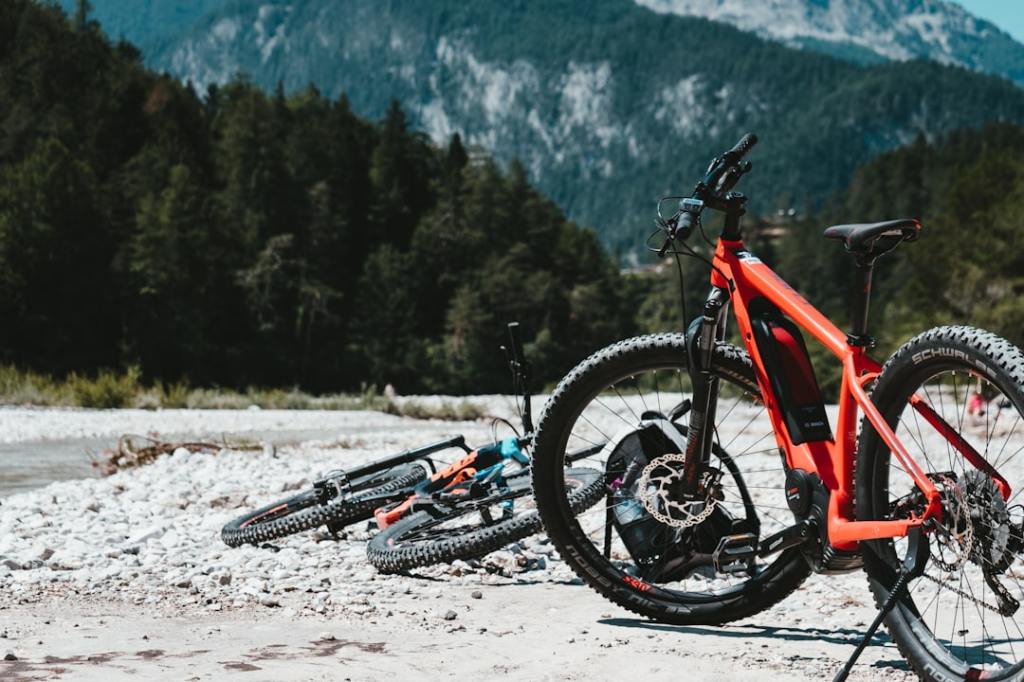
Enduro vs. Trail vs. Cross-Country: The Quick ‘n Dirty Breakdown
Cross-Country (XC)
Picture yourself in snug spandex, set to embark on an adventure with demanding climbs that test your legs and stamina. Cross-country biking, or XC, centers on maximizing efficiency and speed across varied landscapes. While it might not thrill those craving adrenaline-fueled downhill runs, XC riding excels at fast-paced, long-distance travel. It’s perfect for those eager to speed through miles of singletrack trails, all while taking in the natural beauty around them.
Trail
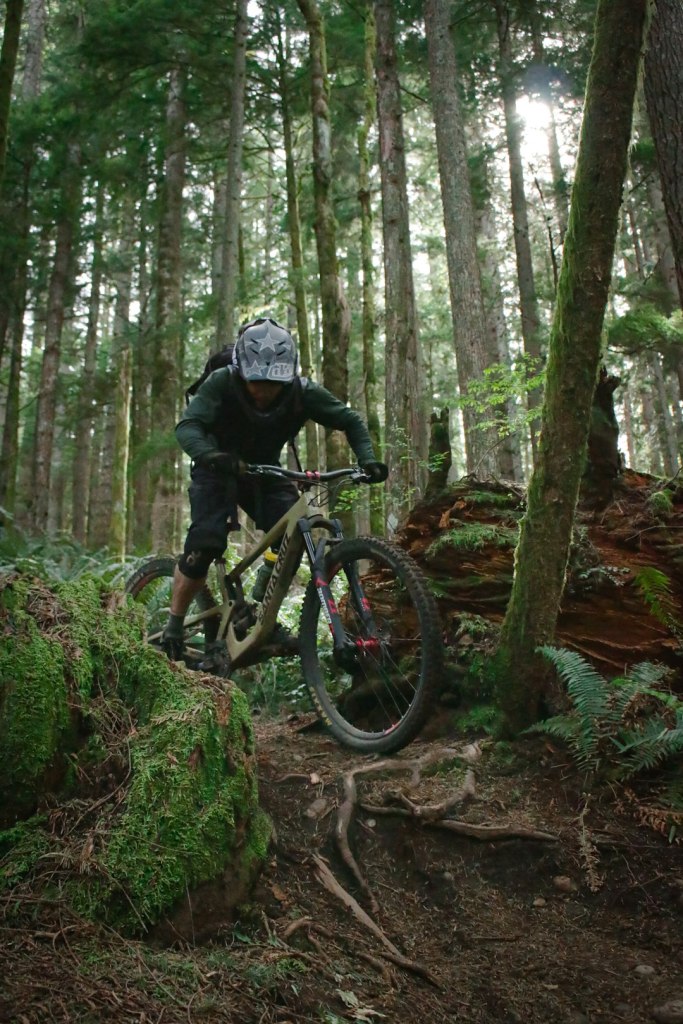
Trail bikes and trail e-bikes are popular for their good balance of performance and flexibility. They usually have 120 to 140 mm of travel, which helps them climb hills well. They provide enough shock absorption to make riding over bumpy terrain comfortable while still allowing for good control. This makes them great for everyday rides, especially if you often ride on smooth trails rather than rocky paths. In short, trail bikes can fit many riding styles, making them enjoyable for both casual rides and more challenging routes.
Enduro
For those who love the thrill of riding fast on rocky paths and tough trails, the Enduro bike is the best option. Known as the “big kahuna,” this bike is made for riders who enjoy going down steep and tricky terrains. Enduro bikes typically have suspension systems ranging from 150 to 170 mm. They feature strong frames and designs that help provide stability and confidence on tough trails. While they are mainly built for going downhill, they can still climb well, especially if they have an electric motor. However, the main appeal of Enduro riding is in the exciting descents, where riders can dive into the adventure and enjoy the fun of navigating downhill courses.
Why Enduro E-Bikes?
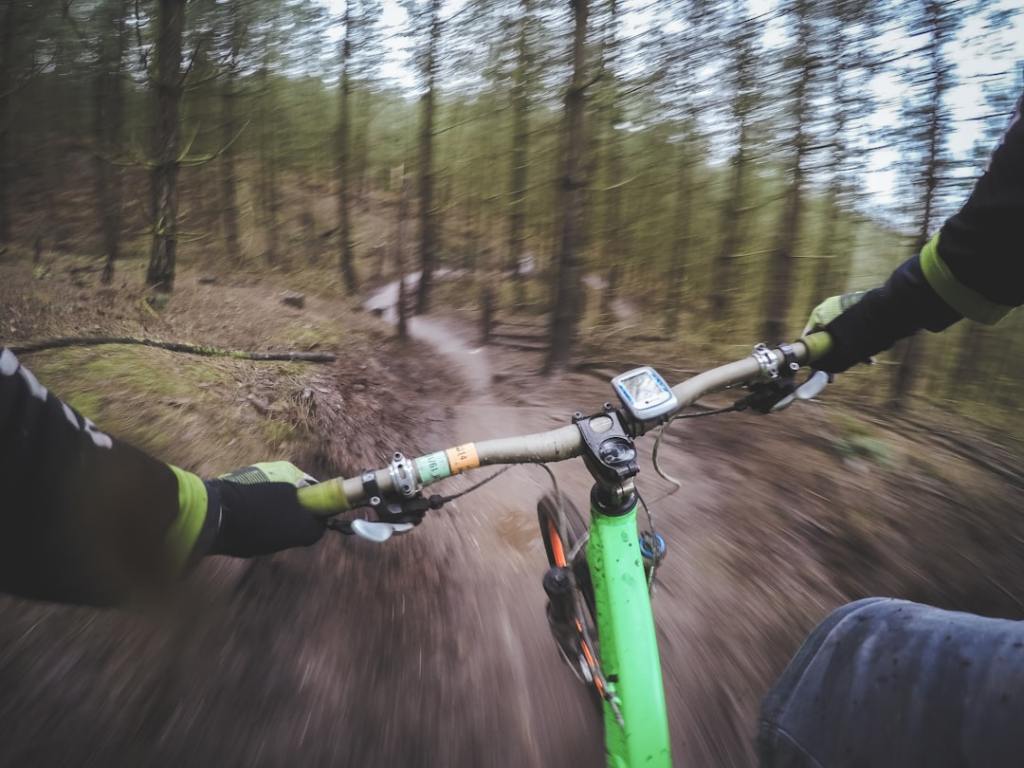
When you incorporate electrical assistance into an enduro mountain bike platform, the benefits become increasingly apparent and multifaceted.
Extended adventure
One of the main benefits is that you can enjoy longer rides. With electric support, you can travel farther, go up steeper hills, and have a more exciting time on the way down. This means you’ll spend more time on the trails and can challenge yourself more. You’ll find more fun and joy in each ride, especially during the thrilling downhill parts.
Uphill superpowers
An electric motor gives you a helpful boost when going uphill. It supplies the power you need to climb steep hills that could otherwise wear you out. Because of this, you can save your energy for the fun downhill rides instead of feeling tired from climbing. This support makes your overall ride better, adding to your sense of achievement and enjoyment as you take on trails that once seemed tough.
Confidence on the gnarly
Boasting a travel range of 150 to 170 mm, these e-Enduro bikes are designed to tackle tough trails effortlessly. This generous suspension allows you to ride smoothly over challenging obstacles like roots, rocks, and big drops, much like a monster truck navigating over rough ground. During your ride, the bike’s ability to absorb shocks and maintain stability boosts your confidence, enabling you to embrace the adventurous side of mountain biking without worrying about losing control or getting hurt.

The Price Tag Reality Check
Here’s the kicker: most high-end enduro e-bikes are pricey—like, “maybe I should sell my car” pricey. Fancy shocks, burly frames, and advanced motors don’t come cheap. But there’s a hack: look for last-year models. Shops often blow them out at huge discounts when next season’s lineup drops. Same epic tech, but you keep more money for post-ride burritos.
The Sweet Spot: Previous-Year Models
- Why they rock: You’re getting near-identical geometry, motor power, and suspension performance for a fraction of the original MSRP.
- What to watch for: Make sure any leftover stock is in the correct size and has the up-to-date motor/battery you want. Even if it’s “last year’s model,” it’s still more than capable of shredding your local mountains.
Two Prime Examples: Orbea Wild M20 & Cannondale Moterra Neo Carbon 2
Let’s highlight two e-Enduro machines that used to run for around 7,000 € but have since dropped in price (sometimes to the low 4,000 € range):
Orbea Wild M20
- Travel: 160 mm out back, big fork up front (Zeb or Fox 38 depending on the year).
- Geo: Slack head angle and modern reach for ripping steep lines.
- Motor/Battery: Bosch Performance CX system with a chunky 750 Wh battery—big climbs, big days, no drama.
- Why it rips: Orbea dialed this bike for seriously aggressive enduro riding. It devours rock gardens and corners like it’s on rails.
Verdict: Perfect if you’re aiming for rowdy descents and love the feeling of a stable, super-planted front end. A tad more “race-rocket” vibe.
Cannondale Moterra Neo Carbon 2
- Travel: 150–165 mm in various versions, usually a RockShox Lyrik or Zeb fork.
- Geo: A bit more “all-around” friendly—still super capable downhill, but easier on flatter trails.
- Motor/Battery: Same Bosch Performance CX punch, same 750 Wh monster battery.
- Why it rocks: A great combo of climbing prowess and descending confidence, especially if you don’t need quite as much suspension as a full 170 mm beast.
Verdict: An excellent do-it-all enduro rig that’s a bit more accommodating for everyday riding and big adventure loops.
Pros & Cons at a Glance
Orbea Wild M20
- Pros:
- Ultra-stable geometry for steep, technical trails
- 160 mm to handle serious chunk
- Full-on enduro pedigree
- Cons:
- Might be overkill if your local trails are mellow
- Setup can feel “big” or sluggish in tight switchbacks
Cannondale Moterra Neo Carbon 2
- Pros:
- Slightly more versatile geometry—still plenty slack but not insane
- Big battery for all-day epics
- Sometimes cheaper than the Wild M20
- Cons:
- “Only” 150–165 mm travel in some builds (less if you want maximum cushion)
- Stock rear tire might be less aggressive if you’re going full send

Final Thoughts
These beasts used to cost around 7,000 € in their prime, but with fresh lines rolling out each year, you can now pick them up for a serious steal. Sure, 4,000 €+ isn’t exactly pocket change, but compared to brand-spankin’-new models, it’s a big saving for top-tier suspension, Bosch motors, and big-battery range.
- If you want max downhill prowess, check out the Orbea Wild M20.
- If you’re after an all-round enduro rig that’s still a downhill crusher, the Cannondale Moterra Neo Carbon 2 is epic.
You’re still dropping decent coin, but you’ll get a fully loaded e-Enduro shredder that can handle pretty much everything you throw at it. So scoop up a last-year model, pocket the savings, and go roost some berms—without also roosting your life savings.
Ride on, and see you on the trails!


 MTBStoke
Leave a comment